
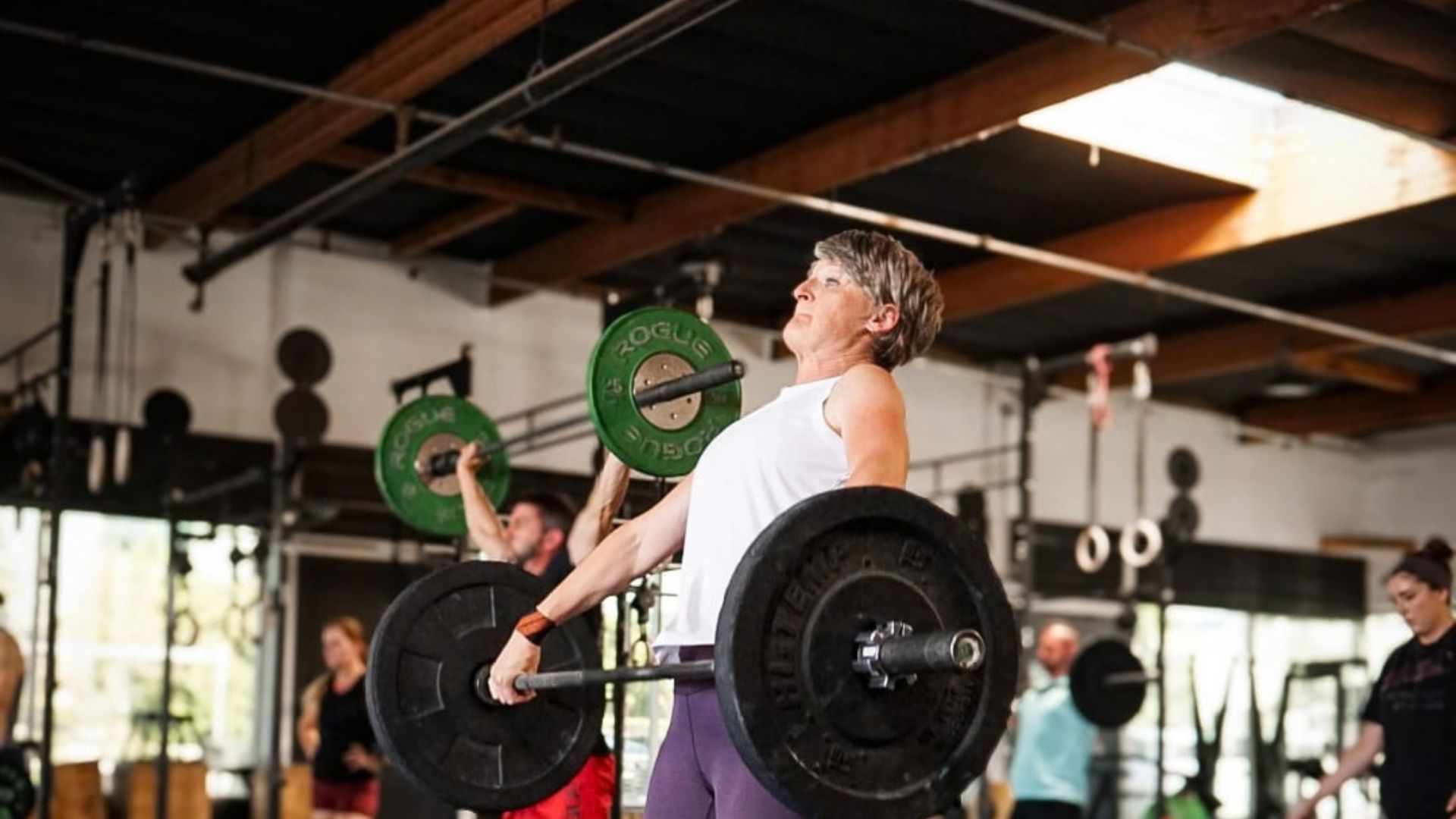
If you’ve ever watched a CrossFit video and thought, “There’s no way I could do that,” you’re not alone. It’s one of the most common things we hear from people who are curious but nervous about walking through our doors.
So, is CrossFit too intense for beginners? Our honest answer is no. Every workout is scaled to you, so a brand-new member and a 15-year veteran can do the same class and each get what they need. The hardest part is usually getting through the door. Once you’re in, your coach takes it from there.
Why the whiteboard workout is only a starting point
The workout on the whiteboard is not a test you have to pass. Your coach guides you through each movement, teaches the fundamentals step by step, and makes sure you’re moving safely before you ever add intensity. Nobody expects you to be perfect on day one. You start where you are, and you build from there.
What scaling actually means in a class
Scaling means we adjust the workout to fit you. That might be lighter weight, an easier version of a movement, or fewer reps. Everyone in class does the same workout, but each person does the version that’s right for their body today.
Our goal is to challenge you without sacrificing good form. Scaling isn’t a step down. It’s how we make sure you get a great workout and stay safe while you build up.
Examples of scaling for weight, movement, and pace
Here’s one sample workout: a 12-minute AMRAP (as many rounds as possible) of 8 dumbbell thrusters, 8 pull-ups, and a 200-meter run.
A brand new person. The coach would likely have them use one light dumbbell, around 10 to 15 pounds, and turn the thruster into a goblet squat to an overhead press so the coach can check depth and posture. Pull-ups become ring rows or a lower bar, which lets them pull their body weight at an easier angle. The run could be a walk or easy jog, or even a short row or bike. The pace is slow and controlled, with rest whenever it’s needed and each set stopped while form is still good. Two or three rounds would be a great result, because the goal is to learn the movements and finish feeling good.
Someone with some experience. They’d use two dumbbells at a moderate weight, roughly 20 to 35 pounds each, and do banded or jumping pull-ups, or mix a few strict pull-ups with rows. They’d jog the 200 meters at a steady pace and take short breaks only when needed. Four or five rounds is a reasonable target, with the goal of moving well at a challenging but consistent effort.
Someone returning after a long break. They’d start with light to moderate dumbbells, about half to two-thirds of their old working weight, and use ring rows or banded pull-ups with fewer reps if needed to ease the shoulders and grip back in. They’d jog the run easily, or row 250 meters if their joints need a break. The pace is moderate and conservative, finishing with the feeling that they could have done a bit more. Three or four rounds would be a solid day. The goal is to rebuild the habit and confidence without chasing old numbers.
The weights and round counts here are examples, not rules. A coach picks the actual numbers after watching you move, and they change from day to day. Everyone does the same workout with the same intent, but each version is adjusted to fit the person doing it.
How coaches decide what intensity fits you
Before class starts. At a free intro or a first visit, the coach has a short conversation. They’ll ask about past exercise experience, how long it’s been since you trained regularly, any injuries, surgeries, or pain, and what you want out of this (weight loss, strength, energy, getting back into shape). They’ll also ask about anything that would change how you move, such as a bad shoulder, a sore back, or pregnancy or postpartum recovery. Anything that sounds medical may get a suggestion to check with your doctor first.
During the warm-up. This is the real assessment, though it doesn’t feel like a test. The coach has you do basic movements like air squats, hinges (a deadlift pattern with no weight), pushing and pulling patterns, and getting a light object overhead. They’re watching for how deep you can squat comfortably, whether your knees cave in or your heels lift, whether your back stays neutral when you hinge, how well your shoulders move overhead, and how your balance and coordination look. These small observations tell them what to scale before you ever pick up a barbell.
Choosing movements and weights. Based on what they saw, the coach picks the version of each exercise you’ll do and starts you light, usually lighter than you think you need. The rule is that technique has to hold up before weight or speed increases. They’ll often ask you to rate how hard something feels, from 1 to 10, and use your answer along with what they see to adjust.
During the workout. The coach keeps watching. They look for form breaking down as you get tired, breathing that’s out of control, pain as opposed to normal effort, and whether you look overwhelmed or are holding back. They’ll tell you to slow down, drop the weight, swap a movement, or add rest. They’ll also tell people to push a little harder when they’re clearly moving well and capable of more.
After class and over the following weeks. Good coaches check in afterward by asking how you felt, what was hard, and whether anything hurt. Intensity is raised gradually, usually over weeks, as your form, comfort, and recovery improve. It also changes day to day. A busy week, poor sleep, or soreness all affect what the right amount is, which is why the same person might scale differently on different days.
What your first few weeks can look like
Many gyms start with a free intro class or a short consult, where the coach goes over goals, injuries, and experience and walks through the basic movements.
After that, new members join regular group classes, which typically run about 60 minutes. A class usually includes a warm-up, some skill or strength work, the workout itself, and a cooldown. The coach scales each movement to the person, so beginners and veterans do the same workout at different levels.
Most new members come two to three times a week. That’s enough to build momentum without too much soreness, and gyms often encourage rest days between sessions early on.
Weeks one and two focus on learning movements and getting comfortable, with lighter loads and plenty of coaching attention. By weeks three and four, most people are scaling with coach guidance, recognizing faces in class, and settling into a routine.
Questions to ask before your first class
A few questions can take a lot of the nerves out of the first day:
- “I haven’t worked out in a while. What will my first class look like?” This tells the coach where you’re starting and lets you picture the hour ahead.
- “How will you adjust the workout for me?” Hearing how scaling works takes away the fear of not keeping up.
- “I have a sore knee (or shoulder, or back). What should I do differently?” Mention any injury or limitation so the coach can plan around it from the start.
- “What should I wear, bring, and eat beforehand?” Small logistics can be a big source of first-day nerves.
- “What happens if I get tired or need to stop?” The answer is almost always “you rest, and that’s fine,” which is worth hearing out loud.
- “How many times a week should I come at first?” This helps you plan realistically instead of overdoing it.
Thinking about a first visit at CrossFit Sympatheia
If you’re in Lake Forest and curious, the next step is simple:
- Chat with us so we can get to know you and your goals.
- Come in for your first class free, by booking personally or online.
- Make a plan around your goals and lifestyle to fit your needs.
No pressure. Bring your questions and we’ll start from where you are.

